Updating your cart…
Confirmation is taking longer than expected. Please try again to check the result.
Your cart is empty.

Pick-up at the port of San Sebastián by our guide identified with the Shore2Shore sign.
La Gomera is one of the eight islands in the western part of the Canary archipelago, the second smallest island, belonging to the province of Santa Cruz de Tenerife and was declared a Biosphere Reserve in 2012. La Gomera, like the rest of the Canaries, is a volcanic island; however, volcanic activity can be considered a thing of the past, with the last eruptions occurring about two million years ago. Water erosion has carved numerous ravines, and along the coast, it has shaped prominent cliffs, turning the island into a unique landscape of natural beauty. In the center of the island is the Garajonay National Park, declared a World Heritage Site in 1986 by UNESCO, the first declared in the Canaries; together with the silbo gomero, a whistled language inherited from the native Gomera inhabitants, a heritage since 2009, they form part of its identity.
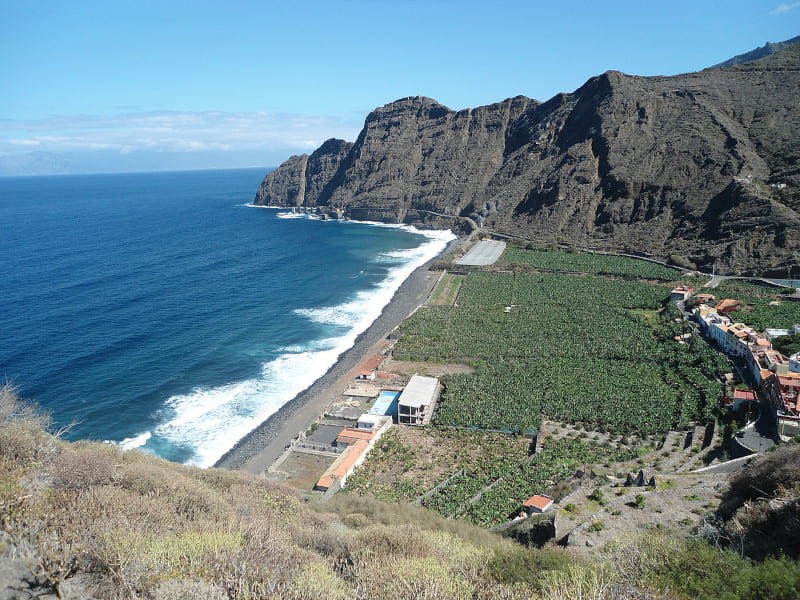
Our visit will begin in Hermigua, in the north of the island, a paradise of green terraces, banana plantations, tranquility, and calm. Hermigua descends from Garajonay to the sea, spilling out in a green carpet of laurisilva, to end at the feet of the old Pescante battered by the Atlantic. This quiet and deep valley hides much of La Gomera’s history and is a true encounter for visitors eager for nature and peace.
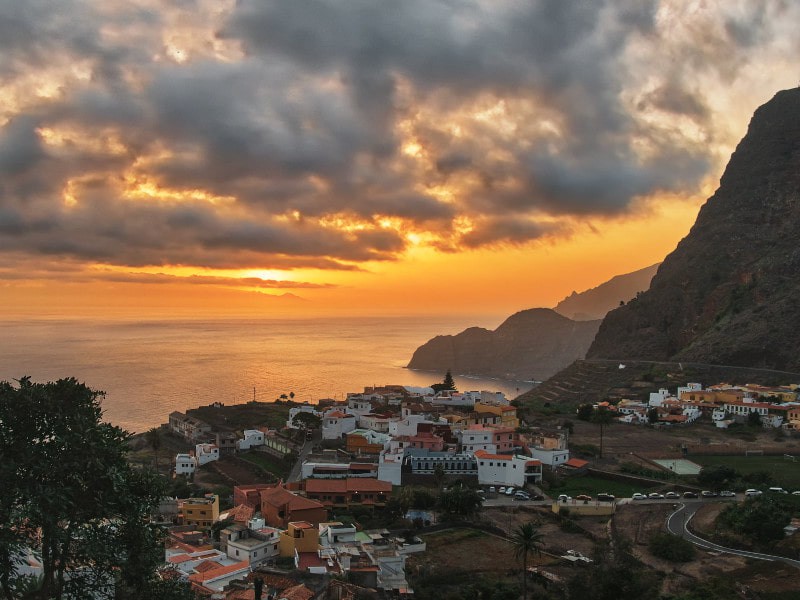
From there we will head to Agulo, which together with Hermigua formed the aboriginal territory of Mulagua. Considered by many as the most beautiful village in La Gomera and Spain; an immense viewpoint tinged by the green of its crops over the Atlantic Ocean, a charming village carefully and lovingly maintained, with cobbled streets and well-kept, restored storybook houses, undoubtedly a rural corner full of charm that will leave us with a delightful taste. In the municipality is the Juego de Bolas Visitor Center, where information about the national park is provided.
From there we will travel to the Laguna Grande in Garajonay National Park, established in 1981 and later named a UNESCO World Heritage Site, covering 10% of the island’s surface and housing a natural treasure from the Tertiary period: the laurel forest. This subtropical vegetation formation is made up of a wide variety of trees that retain their foliage year-round thanks to the high humidity and mild temperatures. This forest, considered a living relic, covered the Mediterranean basin during the Tertiary and almost entirely disappeared with successive glaciations.
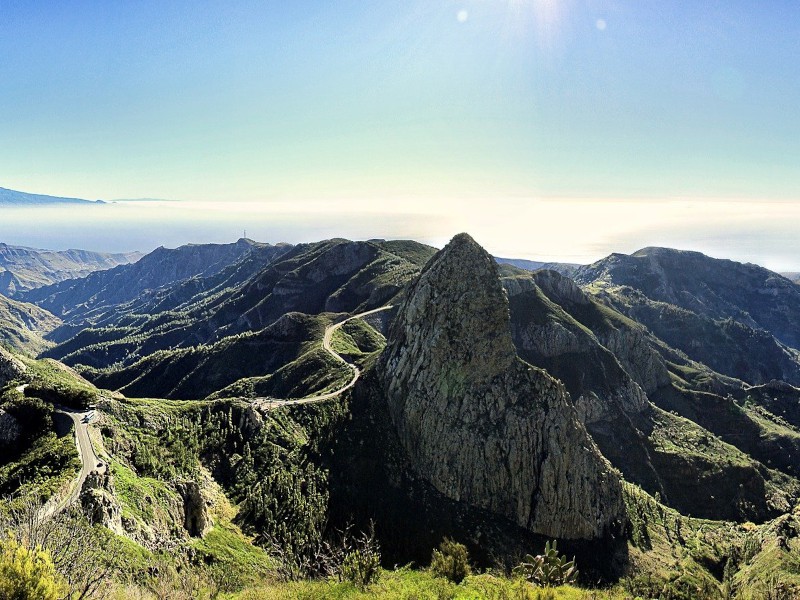
Our last stop will be at the Roques viewpoint, Roque Agando, the most impressive on the island.
Return to the port of San Sebastián for farewell.
GENERAL INFORMATION
NOTES
From 29.00 € / person
Loading available dates…
We could not load dates. Please try again or contact us.
No dates are currently available for this excursion.